Preloader

Office address

3096 Rockmart Rd, Villa Rica, GA 30180, USA

One of our farm locations

1682 Cross Plains Hulett Rd, Carrollton, GA 30116, USA

Table egg category

Wholesale Table Eggs & Export Supply

Table egg wholesale and export planning for importers, distributors and food businesses. Compare seven export size references, specify your packaging and plan a documented shipment.

Shell eggs arranged in protective trays
  • Egg typesCommercial & specialist
  • Export sizesSmall to Super Jumbo
  • Export supportPacking & loading requirements
  • Business baseUSA-based business
White shell eggs packed in paper pulp trays

Conventional Cage Eggs

Conventional cage eggs come from hens housed in cage systems. This is a production-method description, not a size, shell colour or food-safety grade. Buyers should specify the exact housing standard required by their market rather than assuming all cage systems meet the same rules.

View packaging sizes & requirements

Product requirements

Ask for farm identity, the housing-system declaration and batch segregation through the packing station. A cage-system declaration does not replace grading, sanitation or traceability records.

  • Do not substitute conventional eggs for a welfare-labelled order, even if shell colour and weight are identical.
Buyers
Price-sensitive foodservice, wholesale distributors and manufacturing buyers may compare conventional eggs where their procurement policies permit this system.
Regions
Some European and North American buyers prohibit particular cage systems through law or purchasing policy. Check the destination and customer requirements before asking for a conventional cage egg quotation.
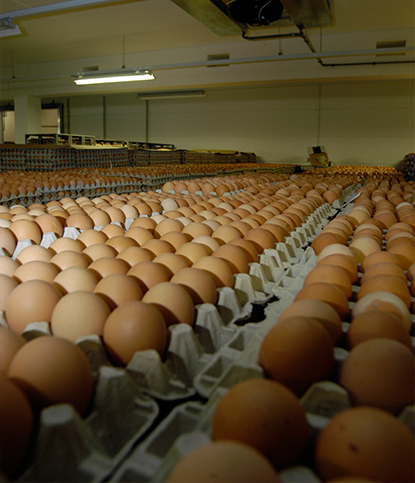
Brown shell eggs on tray lines inside a packing hall

Cage-Free Eggs

Cage-free eggs are laid by hens not confined to cages during the laying cycle. Indoor barns and multi-tier aviaries can be cage-free systems. The term alone does not promise access to the outdoors, organic feed, pasture access or a particular nutrient level.

View packaging sizes & requirements

Product requirements

Request source-flock identification and a documented segregation chain from farm to packing. USDA AMS describes how cage-free identity must be maintained when a plant also packs eggs from other production systems.

  • Cage-free is a housing claim, not a guarantee that eggs are safer or nutritionally superior.
Buyers
Retail supply programmes, hospitality groups and foodservice distributors with cage-free purchasing commitments need evidence that follows each lot.
Regions
Compare the applicable local cage-free definition with the buyer’s welfare policy. A source-system claim accepted in one country may need additional verification or different wording in another.
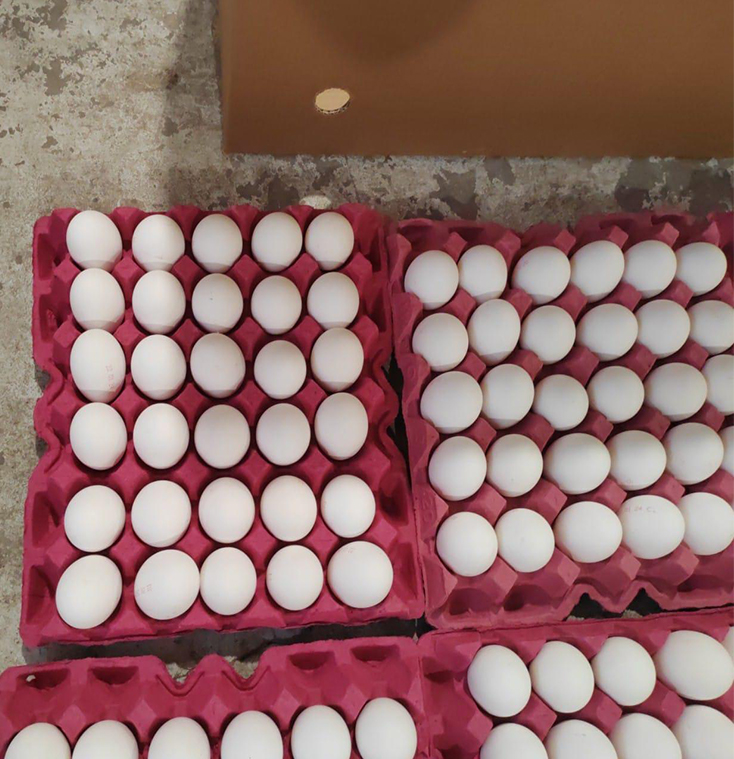
White shell eggs in magenta pulp trays beside a corrugated carton

Free-Range Eggs

Free-range eggs are associated with hens having access to outdoor areas under the applicable production standard. Outdoor-access rules, permitted stocking and verification differ by market and certification scheme. Specify the standard instead of relying only on the phrase free-range.

View packaging sizes & requirements

Product requirements

Ask for outdoor-access records, source-farm traceability and the audit or scheme documentation required by the buyer. Organic certification is a separate question.

  • Free-range does not automatically mean pasture-raised, organic or higher in omega-3.
Buyers
Free-range egg exporters serve buyers building differentiated retail ranges, hospitality menus and welfare-led distribution programmes.
Regions
European, USA and African buyers should check both local labelling rules and their customers’ policies. Outdoor access can be affected by animal-health restrictions; verify the applicable treatment of any temporary housing orders.
Stacked pulp trays holding brown shell eggs

Organic Eggs

Organic eggs require compliance with the organic production and certification system recognized in the destination market. A farm’s feeding practice or brown shell colour alone does not make an egg organic. The certificate, product scope and chain of custody must support the claim.

View packaging sizes & requirements

Product requirements

Request a current organic certificate, the certified operator and packing scope, lot traceability and any transaction or import certificate required for the route.

  • This catalogue is not evidence that every listed organic size is currently certified or available. Confirm the actual lot before ordering.
Buyers
Organic retailers and premium food distributors need a verified claim as well as an egg size, shell specification, pack format and receiving-life agreement.
Regions
USDA organic and European organic requirements are not interchangeable by assumption. Export access, certificate recognition and importer obligations need checking for the actual origin and destination.
Rows of white shell eggs in pulp trays, close view

Pasture-Raised Eggs

Pasture-raised eggs describe a production programme involving access to pasture, but a single universal international definition should not be assumed. Buyers need the exact welfare standard, outdoor-area requirements and independent verification behind the label.

View packaging sizes & requirements

Product requirements

Request the named pasture standard, current certification where applicable and source-flock records. USDA grademarked pasture-raised claims have specific verification requirements under AMS policy.

  • Pasture access does not by itself establish an organic, antibiotic-free or enriched-nutrition claim.
Buyers
Specialist grocers and premium hospitality buyers often value a clearly evidenced husbandry story; the evidence must be specific enough to survive a supply-chain audit.
Regions
Check whether the destination recognizes the proposed scheme and allows the intended label. Market recognition of a certification logo may differ from legal acceptance of a claim.
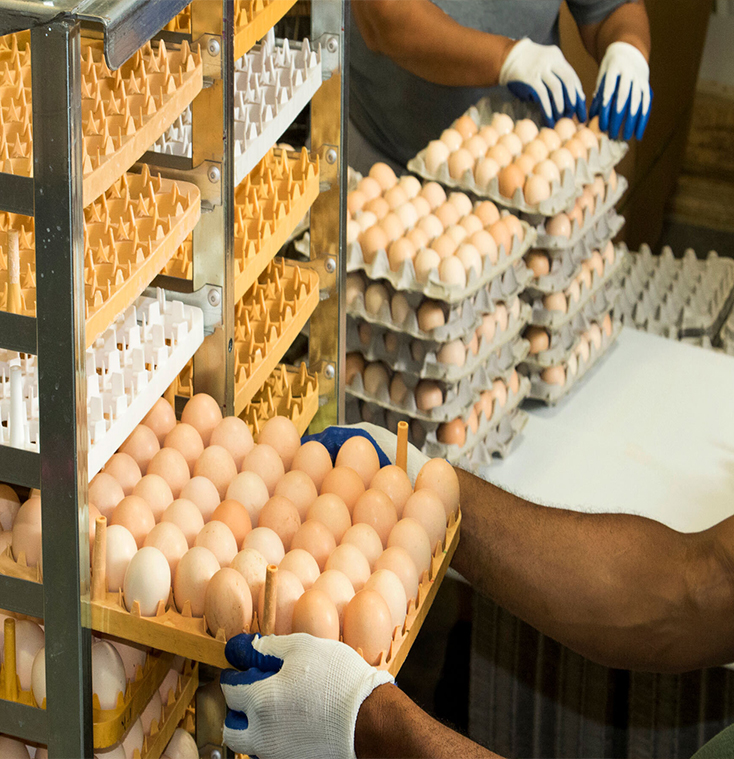
Workers in gloves handling trays of brown shell eggs on a rack

Barn-Raised Eggs

Barn-raised eggs generally describe hens kept in an indoor barn rather than conventional cages. For a commercial contract, define whether the buyer requires a single-level barn, an aviary or another approved indoor system. Do not assume that barn-raised promises outdoor access.

View packaging sizes & requirements

Product requirements

Ask for housing-system documentation, flock identity and packing-station segregation. Record the buyer’s precise barn and cage-free requirements in the specification.

  • Barn-raised is not an organic certification or an automatic free-range designation.
Buyers
Retail and institutional buyers may choose barn eggs where an indoor, non-cage production system matches their sourcing programme.
Regions
Terms such as barn, cage-free and indoor free-roaming are used differently across markets. Translate the housing description into the destination’s permitted label rather than assuming identical definitions.
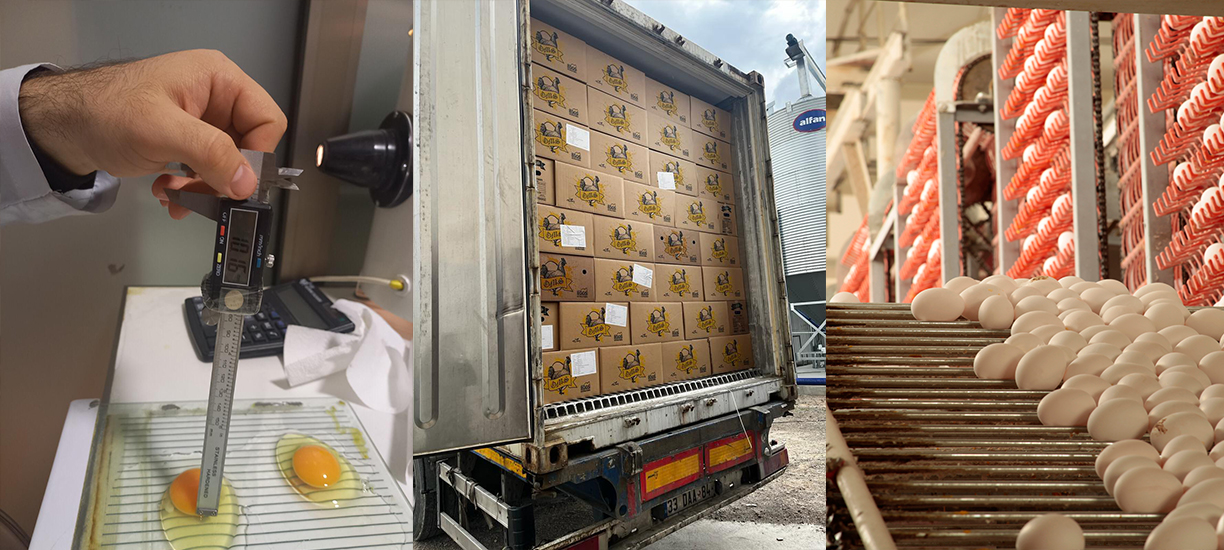
Three views: measuring an egg with calipers, cartons loaded in a truck, and eggs on a grading conveyor

Omega-3 Enriched Eggs

Omega-3 enriched eggs are produced through an appropriate feeding programme designed to alter the egg’s fatty-acid profile. The commercial specification should state the measured amount and basis of any nutrient claim, not simply describe the feed.

View packaging sizes & requirements

Product requirements

Request product-specific laboratory evidence, sampling dates, nutrient units and the approved label wording. A feed declaration alone does not establish the nutrient content of a delivered batch.

  • Do not make disease-prevention claims or promise a particular omega-3 amount without verified product data.
Buyers
Health-positioned retail ranges and specialist distributors need consistent declared nutrient values and a compliant nutrition panel.
Regions
Nutrition-claim thresholds and permitted wording differ in the USA, Europe and other destinations. Ask a competent local reviewer to check the actual nutrition panel and claim before printing packs.
White shell eggs packed in paper pulp trays

Vitamin-Enriched Eggs

Vitamin-enriched eggs use a defined production programme to target selected nutrient levels. The phrase is incomplete unless the vitamin, declared quantity, analytical basis and destination claim requirements are identified.

View packaging sizes & requirements

Product requirements

Ask which vitamin is claimed, the product test report, the permitted tolerance and the current approved label. Confirm whether the stated amount is per egg, serving or 100 grams.

  • No specific vitamin concentration, health outcome or certification is promised by this category name.
Buyers
Retailers building nutrition-led egg ranges and distributors serving specialist food buyers need measured product specifications rather than general wellness language.
Regions
US and European nutrition rules can require different panels and claim thresholds. Confirm the destination’s language, serving basis and nutrient-reference requirements for the proposed pack.
Brown shell eggs on tray lines inside a packing hall

Vegetarian-Fed Eggs

Vegetarian-fed eggs refer to the formulated feed offered to the hens. Buyers should define the excluded animal-derived ingredients and the evidence required from the feed supplier and farm. The claim does not, by itself, describe the housing system.

View packaging sizes & requirements

Product requirements

Request the feed declaration, ingredient policy, traceability and audit scope. Outdoor birds may forage, so the exact claim needs careful wording rather than an unsupported guarantee about everything a hen has consumed.

  • Eggs are not vegan. Vegetarian-fed describes the hens’ feed programme, not a vegan product.
Buyers
Retail buyers and distributors with a feed-ingredient purchasing policy should record that policy alongside the size and packing requirements.
Regions
Check the buyer’s local interpretation and labelling rules. Vegetarian-fed, organic, cage-free and free-range are distinct claims and should not be bundled without evidence for each.
White shell eggs in magenta pulp trays beside a corrugated carton

Antibiotic-Free Eggs

An antibiotic-free egg enquiry must define the intended claim: for example, a production programme without antibiotic use or a test result for specified residues. These are not the same statement. All supplied food must meet applicable residue rules regardless of marketing language.

View packaging sizes & requirements

Product requirements

Ask for the precise production protocol, flock treatment records, any applicable withdrawal controls and the test scope and limits behind residue statements.

  • Do not claim absolute absence of every antibiotic molecule or confuse legal residue compliance with a no-antibiotics-ever programme.
Buyers
Buyers with a documented no-antibiotics purchasing policy need verifiable programme records and an agreed approach to flock treatments.
Regions
The USA, Europe and other importing markets may apply different permitted claims, treatment rules and analytical requirements. Have the destination label reviewed before printing.
Compare

Size comparison

Weight minimums are South African approximate lower boundaries (strictly greater than), not US or European equivalences. Mixed means mixed sizes.

SizeLower boundaryAssumed batch averageTypical usesHandling
Super JumboLower boundary: over 72 g76 gLarger presentation portions and buyers specifying an especially large shell egg. For recipes sold by weight, recalculate egg counts rather than substituting one-for-one.Confirm deep-pocket trays, cell clearance and closure height. Extra-large shells must not be forced into a standard tray or allowed to touch adjoining eggs.
JumboLower boundary: over 66 g69 gFoodservice portions and retail ranges where a larger individual egg is specified. Check the kitchen’s required edible yield and serving size.Check tray cell diameter and vertical clearance under the next tray. Carton height and packing density can change when a larger pocket is needed.
Extra Large (XL)Lower boundary: over 59 g63 gRetail and hospitality buyers seeking a larger egg with a clearly recorded weight threshold. Baking businesses should confirm their formulation basis.Verify pocket fit, tray rigidity and closure pressure, especially when a consumer pack is nested inside an export master case.
Large (L)Lower boundary: over 51 g55 gGeneral retail, wholesale distribution, catering and kitchens requiring a documented large-egg specification. The word large alone is not enough for an international order.Match the stated minimum and actual batch average to the agreed grading specification. Inspect cases for cracked shells and tray movement on receipt.
Medium (M)Lower boundary: over 43 g47 gCost-conscious retail ranges, catering and preparation lines that work to an agreed egg mass. Compare price per egg and price per usable kilogram.Use pockets that support the egg rather than letting smaller shells move excessively. Tray fit matters even when the outer carton matches a larger grade.
Small (S)Lower boundary: over 33 g38 gBuyers specifying smaller individual portions or production recipes based on measured egg mass. More small eggs may be needed for a given recipe yield.Confirm that trays restrain the smaller shell securely. Do not use the minimum threshold as the shipping batch’s average weight.
Mixed SizesMixed sizes; lower boundary over 33 g55 gProcessing, foodservice or distribution buyers able to accept a declared size mix. The contract should state the permitted distribution and whether eggs are sold by count or mass.Clearly mark mixed-size cases and agree the distribution of sizes. Use the measured mixed-lot average for freight calculations; there is no single uniform egg weight.
Opallex export packaging

Opallex container & truck loading plans

Our export team prepares palletized and floor-loaded quotations around your egg size, master carton, receiving warehouse and destination. These planning quantities are confirmed against the approved pack, safe stacking height, airflow and booked equipment before dispatch.

Workers in gloves handling trays of brown shell eggs on a rack

USA pallets: Opallex quotation scenarios

Planning positions: 9 pallets in a 20ft reefer and 20 pallets in a 40ft high-cube reefer.

Opallex USA pallets palletized carton planning
Cartons per pallet20ft cartons40ft cartons
30270600
36324720
40360800
42378840
48432960

Euro pallets: Opallex quotation scenarios

Planning positions: 10 pallets in a 20ft reefer and 23 pallets in a 40ft high-cube reefer.

Opallex Euro pallets palletized carton planning
Cartons per pallet20ft cartons40ft cartons
30300690
36360828
40400920
42420966
484801,104

Opallex’s 40ft USA-pallet planning reference is 20 pallets × 42 cartons = 840 cartons. At 48 cartons per pallet, the mathematical total is 960 cartons. Each scenario requires its own approved carton pattern, pallet rating, height, stability and weight checks; USA and Euro patterns are not interchangeable.

Opallex loading reference by equipment

Container rows use our supplied reference of 42 cartons per pallet: USA pallets 378 / 840 cartons and Euro pallets 420 / 966 cartons for 20ft / 40ft reefers. Egg and weight estimates use 55 g planning batch average; select a size page for size-specific calculations, 360 eggs per carton and the tare inputs below. Truck rows are separate pack-specific calculations. Container floor-loaded quantities await carton dimensions and an approved loading pattern. Floor loading always means protected master cartons without pallets, never unprotected eggs.

Loading planning estimates by equipment and loading mode
EquipmentModePalletsCartons per palletCartonsEggsGross kgNote
20ft reeferFloor loaded (no pallets)Not usedNot applicablePack approval requiredPack approval requiredPack approval requiredCarton dimensions, approved floor pattern, safe layers, airflow and payload are required before quoting a floor-loaded quantity.
20ft reeferEuro pallets1042420151,2009,406Opallex supplied quotation reference: 42 cartons per pallet. Egg totals assume 360 eggs per carton; weight uses the stated batch average and model tare. Final carton pattern, pallet rating, height, airflow and payload require approval. This is not the separate truck geometry model.
20ft reeferUSA pallets942378136,0808,465.4Opallex supplied quotation reference: 42 cartons per pallet. Egg totals assume 360 eggs per carton; weight uses the stated batch average and model tare. Final carton pattern, pallet rating, height, airflow and payload require approval. This is not the separate truck geometry model.
40ft high-cube reeferFloor loaded (no pallets)Not usedNot applicablePack approval requiredPack approval requiredPack approval requiredCarton dimensions, approved floor pattern, safe layers, airflow and payload are required before quoting a floor-loaded quantity.
40ft high-cube reeferEuro pallets2342966347,76021,633.8Opallex supplied quotation reference: 42 cartons per pallet. Egg totals assume 360 eggs per carton; weight uses the stated batch average and model tare. Final carton pattern, pallet rating, height, airflow and payload require approval. This is not the separate truck geometry model.
40ft high-cube reeferUSA pallets2042840302,40018,812Opallex supplied quotation reference: 42 cartons per pallet. Egg totals assume 360 eggs per carton; weight uses the stated batch average and model tare. Final carton pattern, pallet rating, height, airflow and payload require approval. This is not the separate truck geometry model.
Illustrative 4m refrigerated truckFloor loaded (no pallets)0013749,3202,986.6Opallex planning envelope: 4000 × 2000 × 2000 mm; payload 3,000 kg. 5 carton layers; planning batch-average egg mass 55 g.
Illustrative 4m refrigerated truckEuro pallets62012043,2002,766Opallex planning envelope: 4000 × 2000 × 2000 mm; payload 3,000 kg. 5 carton layers; planning batch-average egg mass 55 g.
Illustrative 4m refrigerated truckUSA pallets3309032,4002,037Opallex planning envelope: 4000 × 2000 × 2000 mm; payload 3,000 kg. 5 carton layers; planning batch-average egg mass 55 g.
Illustrative 6m refrigerated rigid truckFloor loaded (no pallets)00366131,7607,978.8Opallex planning envelope: 6000 × 2400 × 2300 mm; payload 8,000 kg. 6 carton layers; planning batch-average egg mass 55 g.
Illustrative 6m refrigerated rigid truckEuro pallets1424336120,9607,674.8Opallex planning envelope: 6000 × 2400 × 2300 mm; payload 8,000 kg. 6 carton layers; planning batch-average egg mass 55 g.
Illustrative 6m refrigerated rigid truckUSA pallets936324116,6407,288.2Opallex planning envelope: 6000 × 2400 × 2300 mm; payload 8,000 kg. 6 carton layers; planning batch-average egg mass 55 g.
Illustrative 13.4m refrigerated semi-trailerFloor loaded (no pallets)001,100396,00023,980Opallex planning envelope: 13400 × 2450 × 2600 mm; payload 24,000 kg. 7 carton layers; planning batch-average egg mass 55 g.
Illustrative 13.4m refrigerated semi-trailerEuro pallets3324792285,12018,090.6Opallex planning envelope: 13400 × 2450 × 2600 mm; payload 24,000 kg. 6 carton layers; planning batch-average egg mass 55 g.
Illustrative 13.4m refrigerated semi-trailerUSA pallets2636936336,96021,054.8Opallex planning envelope: 13400 × 2450 × 2600 mm; payload 24,000 kg. 6 carton layers; planning batch-average egg mass 55 g.

Opallex packaging & loading standards

  • Opallex loading plans are prepared for quotation and shipment planning. The approved packing specification, equipment booking and safe loading schedule determine the final dispatch quantity.
  • Opallex’s detailed quotation model uses a 600 × 300 × 320 mm outer carton, 12 trays × 30 eggs = 360 eggs, and 2 kg packaging tare. Replace these planning inputs with the dimensions and tare of the approved order pack.
  • Allow 100 mm top clearance in this simplified model; real reefer airflow channels, red load line, side/end clearance and temperature engineering can require more. No pallet overhang or double stacking is assumed.
  • Maximum illustrated stacking: six carton layers on a pallet or seven floor-loaded layers, further limited by available height. Box compression and tray suitability must be tested before adopting either limit.
  • Euro pallet: 1,200 × 800 × 144 mm with 1,500 kg rated load. USA/GMA pallet: 1,219.2 × 1,016 mm, assumed 150 mm high, 25 kg tare and conservative 900 kg rated load. Confirm the actual pallet ratings. The model uses a mixed two-lane pallet layout where it fits, not a universal pallet-position claim.
  • Gross carton mass = 360 × assumed average egg mass ÷ 1,000 + 2 kg packaging. Size thresholds are not average weights; substitute the actual graded batch average and packaging mass.
  • Floor loading means cartons loaded without pallets—not loose eggs, eggs without trays, or eggs without cartons. Uniform carton orientation is conservative, not an optimized stuffing plan.
  • Opallex checks equipment payload, road axle limits, chassis, port restrictions, pallet tare, securing materials and verified gross mass before confirming a load. The truck body dimensions and payloads below are quotation-planning inputs.

How we approve your dispatch plan

  • Cartons per pallet = cartons per approved layer × safe carton layers.
  • Palletized cartons = approved cartons per pallet × booked pallet positions.
  • Floor-loaded cartons = cartons per floor layer × approved layers, limited by payload, carton strength and required airflow.
  • We check egg-pocket fit, tray support, master-case strength, ventilation, batch labels and destination artwork.
  • Our team confirms the actual container or truck dimensions, pallet pattern, cargo mass and unloading arrangements before dispatch.
Request an Opallex packing & loading plan
Export guides

Table egg export guide directory

Related products and pages

Table eggs for consumption are separate from fertile hatching eggs.

Buyer questions

Wholesale Table Eggs & Export Supply FAQ

Can I buy eggs in bulk?

Send the required quantity, product specification and destination to sales. Current stock, origin, minimum order and export eligibility are confirmed per quotation; catalogue inclusion is not a live availability guarantee.

Are these egg sizes the same in every country?

No. The seven thresholds shown are South African reference mass boundaries. State the numeric requirement and check the destination’s grading and labelling rules rather than assuming a USA or European size equivalence.

How many cartons fit in a 20ft or 40ft container?

At 42 cartons per pallet, Opallex’s USA-pallet reference is 378 cartons in a 20ft reefer and 840 in a 40ft high-cube reefer. Our Euro-pallet reference is 420 and 966 cartons respectively. Alternative scenarios use 30, 36, 40 or 48 cartons per pallet, subject to packing approval. Container floor-loaded quantities require actual carton dimensions, safe stacking and airflow checks before quotation.

Does floor loading mean eggs without cartons?

No. Floor loading here means protective master cartons loaded without pallets. Eggs still need suitable trays, cartons, restraint and approved handling.

What should I check when comparing leading table egg exporters?

Compare the actual source and lot records, destination eligibility, claim evidence, packing specification, temperature plan and written terms. A search phrase such as top USA eggs exporters is not independent verification of a supplier’s ranking or shipment eligibility.

Do you also supply bulk egg whites or egg powder?

Shell-egg listings do not confirm processed egg availability. Read the separate buying guide and ask sales about the exact product form and specification. Do not substitute egg powder or liquid whites for a fresh shell-egg order.

Request a quote

Quote for Wholesale Table Eggs & Export Supply

Tell us your packing requirements, destination and delivery schedule. Submit your enquiry directly to the Opallex sales team at sales@opallex.com.

Fields marked with an asterisk are required.

Opallex quality assurance

Egg certification & export standards

Opallex’s egg export programme includes USDA and egg-grading certification. Each shipment is prepared against the product-quality, packaging and export-documentation requirements applicable to its origin and destination.

USDA certification

USDA certification forms part of Opallex’s egg export programme. Our team provides the applicable documentation and confirms its product, facility and origin scope during order review.

Egg grading & product quality

Opallex provides egg-grading certification and agreed quality specifications, including the declared grade, size requirements, packing date and batch identification for applicable egg orders.

Export documentation & standards

We coordinate the health certificates, traceability records, packing lists and other export documents required for the agreed route. Product eligibility and destination requirements are checked before dispatch.

Request certification & export requirements